
When supply chains become strategic assets
- Apr 17
- 4 min read
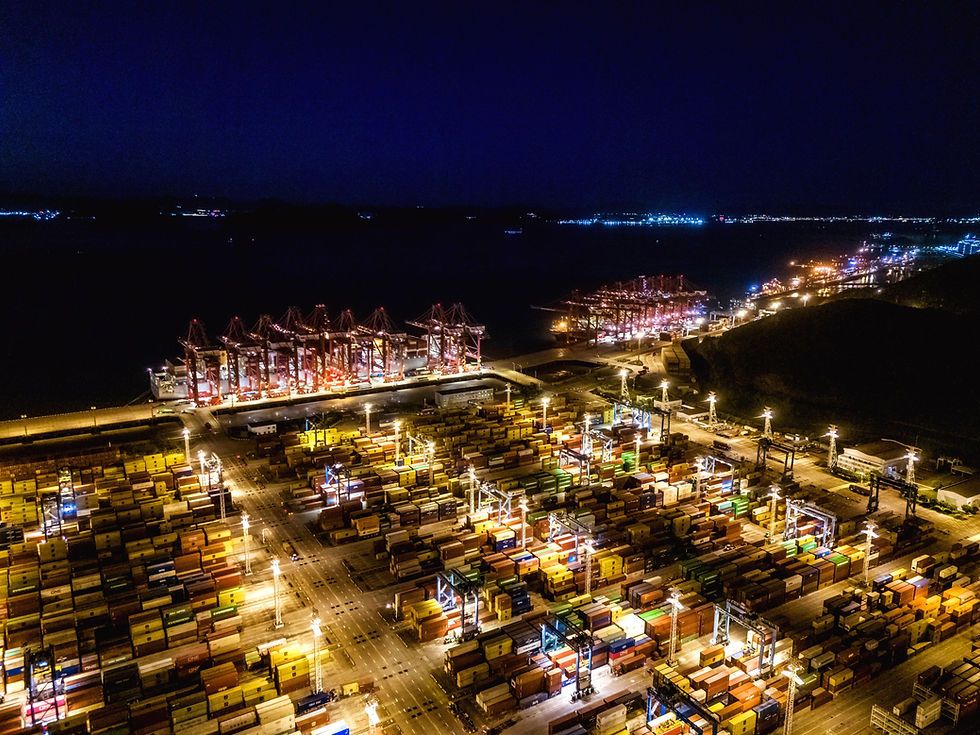
On 7 April 2026, China publicly released the State Council’s Regulations on Industrial and Supply Chain Security. The 18-article regulation took effect immediately, with no transition period. As China’s first dedicated administrative regulation in this area, it creates a standing framework for risk monitoring, prevention, emergency response, and investigations into conduct deemed harmful to industrial and supply chain security.
At one level, this may look like another addition to China’s already dense regulatory landscape. But it points to something more structural. Supply chains are no longer being treated simply as commercial systems. They are increasingly being governed as strategic assets. That distinction matters.
What stands out here is not only the possibility of action against foreign actors. More important is the creation of a permanent governance framework. The regulation establishes central coordination across ministries, a monitoring and early-warning system for supply chain risks, prevention and reserve mechanisms in key sectors, and emergency powers to intervene in production, logistics, and supply when needed.
This marks a shift from reactive policy to continuous oversight. The state is not just reserving the right to step in when disruption occurs. It is putting in place a framework to watch, assess, and shape how supply chains function in advance. From Beijing’s perspective, this is consistent with a broader direction of travel. Economic security, technological autonomy, and supply-chain resilience are being tied more explicitly to national security and social stability.
The regulation also gives Chinese authorities room to investigate and respond to foreign states, organisations, or individuals considered harmful to industrial and supply chain security. That matters because the language is broad. It refers to conduct that disrupts normal transactions, applies discriminatory measures, or causes substantial harm, or a substantial threat of harm, to China’s supply-chain security. The breadth of Article 15 raises the possibility that certain commercial decisions, even when taken for ordinary compliance or risk-management reasons, could come under scrutiny if they are seen as producing that effect.
That is where the issue becomes more serious for international business. European business groups have already raised concerns that the scope could extend to ordinary commercial decisions in certain circumstances, even where no hostile intent exists. Whether enforcement develops that way remains to be seen. But the direction is clear enough: risk can no longer be understood only in terms of disruption. Interpretation matters too.
For years, companies have thought about supply-chain risk mainly through the lens of shocks: pandemics, port congestion, geopolitical crises, transport bottlenecks. Those risks remain very real. But this regulation highlights a different layer of exposure, one that comes from conflicting regulatory expectations. Companies now operate across EU due diligence requirements, US export controls and sanctions, data governance rules, ESG-related obligations, and now China’s own supply-chain security framework.
These systems do not necessarily align. A company complying with one set of rules may create exposure under another. A decision that is legally prudent, or even legally required, in one jurisdiction may be interpreted differently elsewhere. That is becoming less of an exception and more of a normal operating condition.
One of the less noticed aspects of the regulation concerns information itself. The rules allow authorities to act against organisations carrying out supply-chain-related investigations or information collection in violation of Chinese legal requirements. This matters because modern supply-chain management depends heavily on visibility: supplier mapping, due diligence, audits, traceability, data sharing. At the same time, European regulation is pushing companies toward more transparency, more documentation, and more accountability. The result is a structural tension. In practice, companies may find themselves expected to collect and disclose more information in one jurisdiction while facing tighter constraints on how that information is gathered, handled, or transferred in another.
This regulation does not appear out of nowhere. It formalises a direction already visible in practice. Across sectors, companies have been reconfiguring supply chains under geopolitical pressure for some time. In strategic industries such as semiconductors, advanced manufacturing, and critical materials, efforts to reduce reliance on China are already well underway. Until recently, those moves were often framed mainly in terms of resilience, diversification, or industrial policy. Under this new framework, they may also carry regulatory and political meaning in ways companies cannot ignore.
For European firms, the implications are particularly sharp. Many remain significantly exposed to China, whether as a market, a production base, or both, while also facing growing obligations under EU rules, including due diligence and sanctions-related compliance. China’s new regulation adds a further layer of complexity: closer scrutiny of how and why companies adjust their China exposure, greater sensitivity around supply-chain investigations and data collection, and a higher likelihood that decisions taken in Europe will be interpreted through a different logic in China.
That is really the point. Companies are no longer operating within a single regulatory environment. They are moving across multiple systems, each with its own assumptions, priorities, and thresholds of concern.
So the question is no longer simply whether supply chains are risky. They always were. The more important change is in the nature of that risk. Exposure now arises not only from disruption itself, but from the interaction between business decisions, regulatory obligations, and political interpretation. That interaction is harder to predict, harder to quantify, and harder to delegate.
It also demands a different set of questions. Where are we exposed to jurisdictions with competing expectations? Which parts of the supply chain sit in sectors likely to be treated as strategic? How might a compliance decision in one market be read in another? Do we understand not just our suppliers, but the regulatory and political environments in which they operate?
These are not procurement questions. They are board-level questions.
China’s new regulation is, above all, a signal of direction. It reflects a world in which governments are increasingly prepared to intervene in economic systems to protect what they define as strategic interests. For companies, preparedness can no longer mean resilience alone. It also means being able to navigate competing systems at the same time.
In that environment, the real risk is not only disruption. It is misalignment.


